Dan is planning a week in Cusco. He searches “shamanic cactus ceremony” and gets page after page of pretty photos. Every site uses the word “shamanic,” but no page says what the shaman actually does.
Is it someone who hands you a cup and walks away? Or someone who looks after you all day? Dan cannot tell.
That is the question this blog answers. “Shamanic” is the most used and least explained word in this field. We will explain it in plain words, using what happens in our own ceremonies in Cusco, so you can spot a real one before you pay.
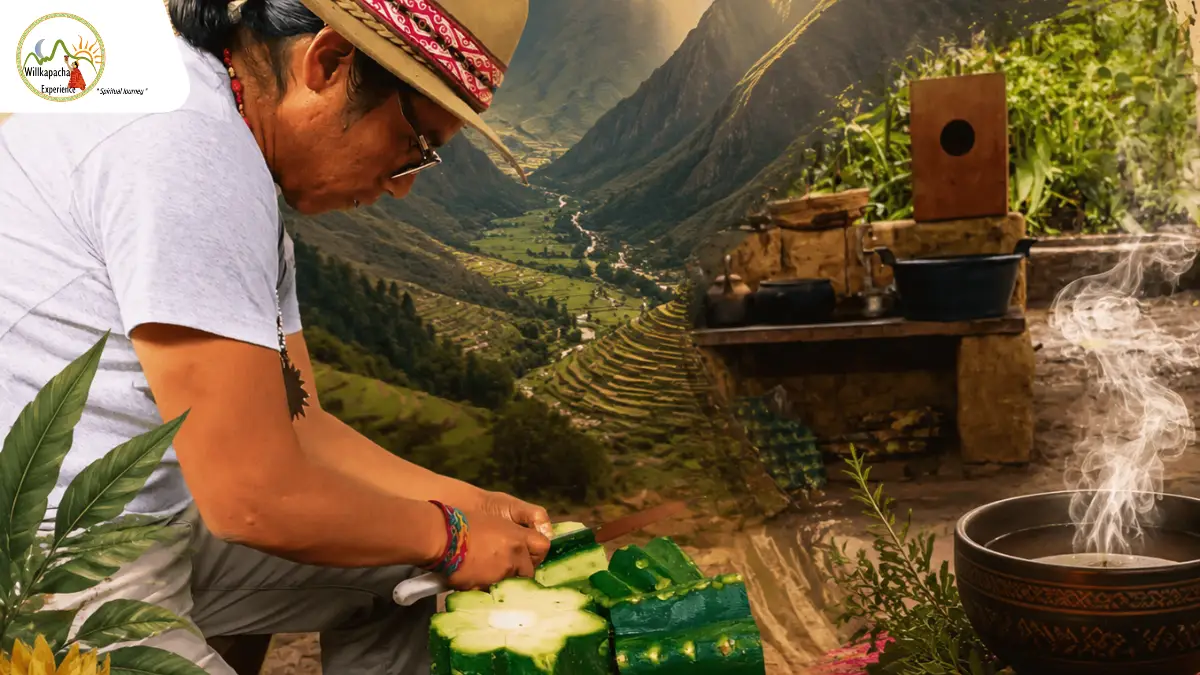
Quick answer: A shamanic cactus ceremony is a day of ceremony with the San Pedro cactus (also called wachuma), led by a trained guide. In the Andes, this guide is often called a paco. The guide opens the space with prayer and offerings, plays traditional music, watches over you during the day, and closes the ceremony with a talk. The cactus is only one part. The guide and the care around it are what make the ceremony shamanic.
What Does “Shamanic” Mean in a Cactus Ceremony?
The word “shaman” did not come from the Andes. In Peru, you will hear other words. We use “paco” or “Hampikamayoq,” a Quechua word for a healer. Our guide speaks Quechua, Spanish, and English. That small detail tells you something. A real guide has a place in a living tradition. They are not just using a trendy title.
So what does the guide do? In our ceremonies, a lot happens before and after the cactus:
- Opens the space with prayer and offerings. We use flowers, Florida water, mineral water, and mapacho (tobacco).
- Gives the medicine and watches over you through the day.
- Plays Andean and Inca music, called icaros, during the ceremony.
- Answers questions and helps if you need support.
- Closes with a fire ceremony, then a talk and a gratitude ritual the next morning.
For more on this role, read our post on the role of shamans in a San Pedro ceremony.
Shamanic Cactus Ceremony or Just a Cactus Drink? A Simple Comparison
Two places can offer the same cactus and give you a very different day. This table shows what a guided ceremony adds and the question to ask about each part.
| Part of the day | What a guided ceremony adds | Question to ask |
| Opening | Prayer and offerings that set the tone | How do you open and close the ceremony? |
| Music | Traditional Andean melodies throughout the day | Who plays the music, and is it live? |
| Care | A guide who stays present and watches over you | How many guests does each guide look after? |
| Closing | A fire ceremony and a moment of thanks | What happens at the end of the day? |
| Next day | A talk about what came up | Is a talk included in the price? |
Many people search for a cactus ceremony and sound healing together. We keep it simple. The sound in our ceremony is traditional music that supports the day. It is part of the ritual, not a spa treatment.
How to Tell a Real Shamanic Cactus Ceremony From a Show
Anyone can type “shaman” on a website. These checks work better than reviews alone. Ask before you pay anyone, including us:
- Who trained the guide, and for how long?
- Does the guide speak a language I understand?
- Do you ask for a health form before I pay?
- What happens if someone feels unwell, and how far is the nearest clinic?
- Will you tell me honestly if I should not come?
Watch for red flags too: a promise to cure anything, pressure to pay today, or a low price with no list of what is included.
What Happens in a Shamanic Cactus Ceremony?
The ceremony is not the only long part of the day. From pick-up to dinner, ours runs from early morning to evening. This is the plan for our two-day Wachuma retreat:
- 7:00 AM: We pick you up at your Cusco hotel.
- Morning: A 1.5-hour drive to the ceremony place, the Temple of Killarumiyoq.
- Daytime: The ceremony itself, mostly outdoors.
- Late afternoon: A 1.5-hour drive back to our retreat house in Urubamba, then a fire ceremony.
- Evening: A simple meal and rest.
- Day 2: Breakfast, a talk with the Maestro, a flower bath, and a gratitude ritual. You finish around 3 to 4 PM.
The effects can last 10 to 14 hours. We describe them as often gentle and heart-centered, but gentle does not mean nothing happens. People often report:
- A slow start: The first hour or two can feel quiet. Some people get restless and wonder if it is working.
- Body signs: Nausea or vomiting can happen. Your heart rate may go up, your pupils may widen, and bright light may feel strong.
- Mind and mood: Feelings can rise, like joy, sadness, or love. Visions are possible, but many people do not see any.
- A soft landing: In the later hours, many people feel calm, talkative, or simply tired.
Is a Shamanic Cactus Ceremony Safe?
Safety is not about the cactus alone. It is about the people and the plan. A retreat is also not medical treatment. Talk to your doctor first if any of these apply to you:
- You take regular medicine, especially for mood or sleep. Never stop it on your own.
- You have heart problems or high blood pressure.
- You or a close family member has had psychosis or bipolar disorder.
- You are pregnant or nursing.
These are common reasons to skip a ceremony or get medical advice first. Tell the team the full truth. They are there to protect you, not to judge you. A note on the law: San Pedro has a long traditional use in Peru, but the rules in your home country may be different. Leave everything in Peru, and never try to carry cactus or powder home.
Who Is a Shamanic Cactus Ceremony Right For? Find Your Fit
Find yourself in this table.
| If you are… | What helps |
| New to plant medicine | Start with one ceremony, not a long package. Ask for a call first. |
| Someone who has done ayahuasca | The cactus works in daylight, often outdoors, and you stay awake and talkative. Many find it a very different day. See our guide on ayahuasca vs San Pedro. |
| Traveling alone | Message us first and ask how group size works for one person. Ask who else will be there and where you will sleep. |
| A couple or two friends | A cactus ceremony for couples works best when you expect different experiences. Our program is built for two or more people. Plan quiet time afterward, not a big talk. |
| Short on time | Keep two free days between the ceremony and any big hike or train day. Ask about our Wachuma and Machu Picchu 3-day plan. |
| Taking medicine or living with a health condition | See your doctor first. Then write to us with the full picture. |
Cactus Ceremony Preparation: The Week Before
Good cactus ceremony preparation is simple. It is mostly about rest and honesty:
- Ask for exact diet rules. Many guides just ask for light food and no alcohol or recreational drugs for several days.
- Sleep well. Do not arrive straight off a night flight.
- Pick one small question, not ten big ones. A small question is easier to hold than a big one.
- Pack the basics: 2 liters of water, a hat, sunglasses, rain gear, sunscreen, bug spray, and comfortable hiking shoes.
- Keep your calendar empty the day after.
Plan for altitude too. Cusco sits at about 3,400 meters. Urubamba, in the Sacred Valley, is lower, at roughly 2,900 meters. Do not book your ceremony for your first full day at altitude. Give yourself one or two nights first, and drink water early and often.
What Should a Shamanic Cactus Ceremony Include? Costs to Compare
Two ceremonies at the same price can include very different things. Here is what our two-day program covers, from $295 per person.
| Included | Not included |
| Private or double room at the retreat house | Your Cusco hotel |
| Round-trip transport from Cusco | Extra spending |
| The ceremony, offerings, and the medicine | Food not listed on the program |
| A flower bath ceremony | Tips (optional) |
| A light lunch, fruit, and dinner | |
| A talk with the Maestro afterward |
Costs people forget are an extra hotel night in Cusco, a free buffer day before any big hike or Machu Picchu train, and travel insurance. A private ceremony, with no other guests, is available on request. When you compare ceremonies, ask: “What would I still need to pay for after I arrive?”
After a Shamanic Cactus Ceremony: The Part Most Pages Skip
Most pages end when the ceremony ends. For many people, the real work starts the next morning. That is why our second day has a talk with the Maestro, a flower bath, and a gratitude ritual, not a rush to the airport.
Once you are home, these steps can help:
- Keep the first three days light. No big meetings.
- Write for ten minutes a day. Facts first, feelings second.
- Pick one small change and try it for two weeks.
- If heavy feelings stay, speak to a therapist or a doctor. A ceremony does not replace care.
If Dan wrote to us today, we would tell him this. Ask who the guide is. Ask what the day looks like. Keep two free days before Machu Picchu. And ask every ceremony the questions above, including us.
FAQs
What is a shamanic cactus ceremony?
It is a guided ceremony with the San Pedro cactus, also called wachuma. A trained guide opens the space, plays traditional music, watches over you, and closes the day with a talk.
How long does a shamanic cactus ceremony last?
Our guide says the effects can last 10 to 14 hours. Plan the whole day, and keep a free day after it.
Do I need experience before a shamanic cactus ceremony?
No. Many people come for the first time. Tell the guide you are new, start with one ceremony, and answer the health questions honestly.
Is a shaman the same as a doctor?
No. A paco is a traditional guide, not a medical professional. Talk to your doctor first if you take medicine or have a health condition.
Ready to Join a Shamanic Cactus Ceremony in Cusco?
A good shamanic cactus ceremony is not the biggest one or the cheapest one. It is the one with a guide you can ask honest questions, a plan that fits your health, and time to rest before and after. Start with one ceremony. Ask a lot. Leave room on both sides.
If you want to talk it through, message us on WhatsApp at +51 974 278 312 or use our contact page. Our two-day wachuma retreat starts at $295 per person. Tell us your dates, your health questions, and if you have done this before. We will tell you honestly what fits.
This guide is for general information and is not medical advice. Prices and inclusions can change, so confirm them with the team before you book.