The van pulls away, and the quiet arrives all at once. You are standing near the community of Pacchanta in the Cusco region of Peru, with a daypack, cold fingers, and a head that feels slightly too light. You expected the next six days to be simple: walk, breathe, eat, sleep, repeat.
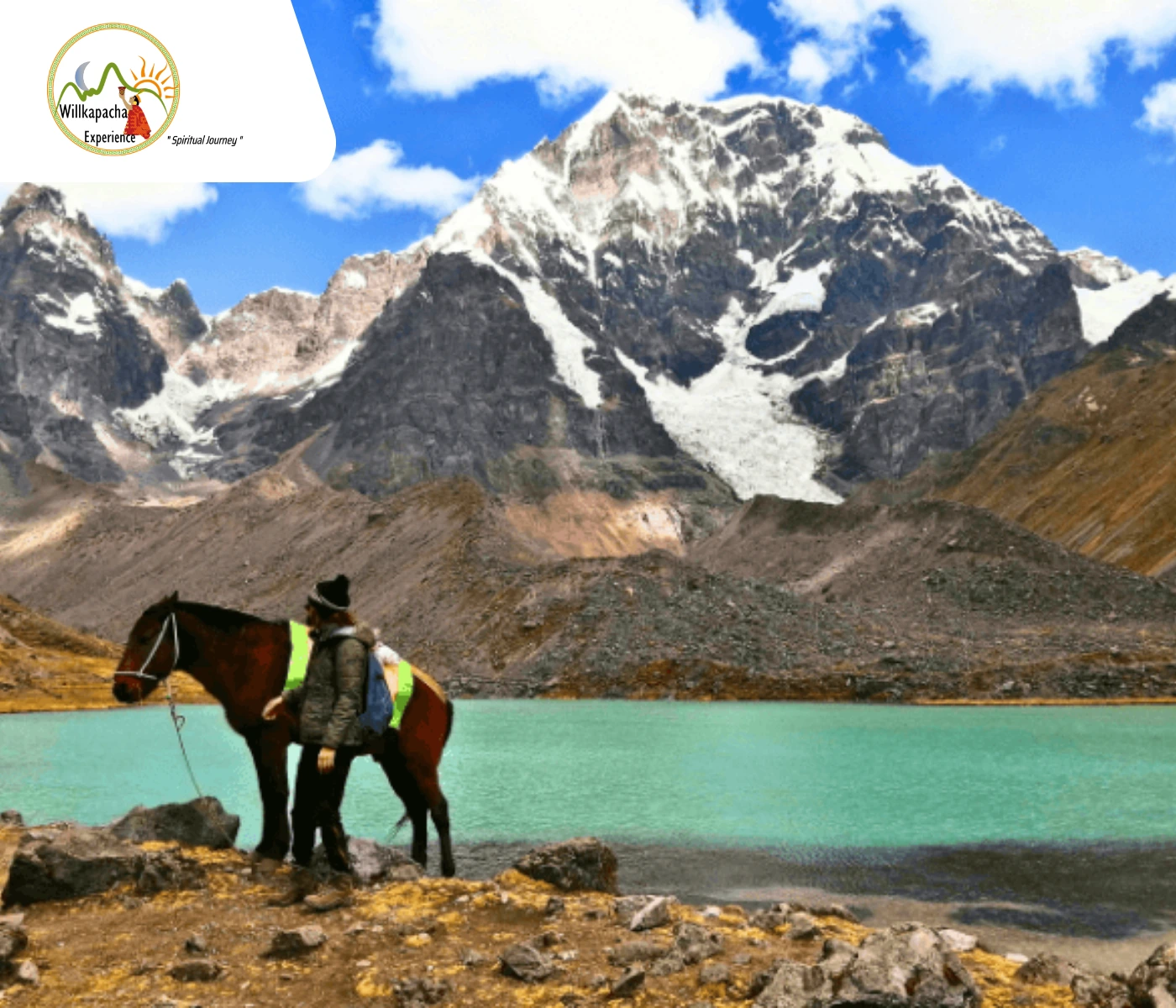
Then your guide offers you a few coca leaves and asks you to greet the mountain before you take a single step. Snow glows on the ridge above camp. Horses graze nearby. Somewhere between the thin air and that small ritual, a question forms. Is this Ausangate Trek Peru experience really only a hike?
What Makes the Ausangate Trek Different From a Typical Peru Hike?
Ausangate is a snow-covered peak in the Cordillera Vilcanota, in the Cusco region of southern Peru, South America. The client’s tour page gives its height as 6,385 metres. Most Ausangate Trek Cusco departures begin with an early drive southeast.
You Trek Around a Sacred Andean Mountain
In Andean belief, a mountain like Ausangate is an apu, a living guardian of the land and people below it. On Day 1 your group stops at Pacchanta, asks permission to enter, and greets the mountain with coca leaves. You are a guest on someone’s ground, and that changes how you look at the view.
The Landscape Keeps Changing Around You
Expect high grassland, cold lagoons and snowy ridges, with farming communities in between. This programme visits Otorongo Ccocha lagoon and ends with a soak in the hot springs near Pacchanta. Weather swings fast at this height, so pack as if the forecast might be wrong.
It Feels More Remote Than the Better-Known Peru Treks
Ausangate trekking tends to feel quieter than the Inca Trail or Salkantay. You will not finish at Machu Picchu or pass Inca ruins. Inca Trail and Salkantay figures below are approximate.
| This Ausangate retreat | Inca Trail | Salkantay | |
| Ends at Machu Picchu? | No, returns to Cusco | Yes | Usually yes |
| Main draw | Sacred mountain, lagoons, ceremony | Inca sites and Machu Picchu | Mountain scenery, then Machu Picchu |
| High point | 4,450 m (listed, Day 1) | About 4,200 m | About 4,600 m |
How Hard Is the Ausangate Trek in Peru?
Short answer: the walking is moderate, but the altitude is the real test. Willka Pacha’s six days are not a full loop of the mountain. Only two days list walking times. Many other companies run the full circuit, with passes above 5,000 metres, and that is a tougher trek.
Ausangate Altitude: Why the Height Matters More Than the Distance
Cusco sits at about 3,400 metres. The itinerary lists a maximum of 4,450 metres on Day 1 and 4,230 metres on Day 5, and you camp in this high country for five nights. Thin air makes ordinary things harder, even sleeping. That is why Ausangate altitude matters more than the 8 km distance.
Who Will Find the Ausangate Trek Challenging?
People who fly in and head straight up struggle most. So do people who dislike cold nights in a tent. Dry-season nights in Cusco already fall to between 0 and 5°C, according to the company’s FAQ, and camp will be colder. With a heart, lung or blood-pressure condition, talk to your doctor first.
Ausangate Trek Difficulty vs. Technical Climbing
This is a trekking and ceremony programme, not a mountaineering expedition. The itinerary lists no summit attempt and no climbing gear. Climbing the 6,385-metre summit is a separate, technical undertaking.
What Does a 6-Day Ausangate Trek Itinerary Look Like?
This Ausangate itinerary comes from Willka Pacha’s Spiritual Initiatic Retreat Apu Ausangate 6D/5N, which runs March to December for a minimum of two people. As an Ausangate Trek 6 days plan, it reads more like a retreat timetable than a trail schedule.
Day 1: Cusco to Pacchanta
Hotel pick-up in Cusco is at 5:00 AM, then the drive to Pacchanta. After breakfast you greet the mountain with coca leaves, set up camp and receive teachings. The page lists 8 km, about 4 hours 35 minutes, and a maximum altitude of 4,450 metres.
Day 2: Full-Day Wachuma Ceremony
A sunrise greeting opens the day, and the Wachuma ceremony fills most of it. The evening is for meditation near the lagoons, then dinner and a night in tents.
Day 3: Otorongo Ccocha Lagoon
After coca tea, the group visits the lagoon for what the programme calls water element work. In the afternoon you learn about hallpay, the making of offerings.
Day 4: Mat’anas and Khuyas
A learning day. You study ceremonial blankets (mat’anas) and sacred stones (khuyas), and the ceremonial items are purified in an afternoon ritual.
Day 5: Despacho Offering and Hot Springs
The main offering ceremony, the despacho, happens in the morning. In the afternoon you walk back to Pacchanta: 8 km, about 4 hours 35 minutes, with a maximum altitude of 4,230 metres. Evening brings hot springs and camp.
Day 6: Apacheta Ceremony and Return
A short meditation and the final Apacheta ceremony close the retreat. After lunch you return to Cusco.
The page does not name campsites or give distances for the other days, so ask before booking. It lists transport, entrance tickets, camping gear, cooks, horses and a first aid kit. Not included: your Cusco hotel, last-day dinner, sleeping pads, sleeping bags and tips.
What Should You Expect at Ausangate’s Altitude?
How to Acclimatize Before the Trek
Spend a few days in Cusco first. Walk slowly and drink water often. The tour page does not mention acclimatization days, so ask the team how to plan them.
Common Signs of Altitude Sickness
Mild signs include headache, poor sleep, nausea, dizziness and unusual tiredness. More serious signs are a headache that will not ease, repeated vomiting, confusion, stumbling, or breathlessness at rest.
When You Should Stop and Tell Your Guide
Speak up at the first sign, not the fifth. With serious symptoms, going down is the standard response, and the trek can wait. Tell your guide on ceremony days too, since altitude symptoms and ceremony effects are hard to tell apart.
How to Prepare for the Ausangate Trek
Build Endurance Before You Travel to Peru
Good Ausangate Trek preparation starts months before you fly. Walk four or five hours at weekends, uphill with a loaded daypack, which is close to Day 1.
What to Pack for a High-Altitude Trek
This list follows the packing advice on the company’s page.
| Category | What to Consider |
| Clothing | Wicking shirts, hiking trousers and socks, warm layers, warm jacket, hat and gloves |
| Footwear | Light, comfortable hiking boots |
| Weather protection | Rain gear or a poncho |
| Sun protection | Sunglasses, sun cream and a hat |
| Hydration | Bottles or a hydration bladder, at least 2 litres in total |
| Personal items | Light daypack, sleeping bag and air mattress (not included), spending money for drinks and tips |
| Documents | Valid, original passport |
What Travellers Often Underestimate
- Cold nights in a tent near a glaciated mountain.
- Fast weather: sun, wind and rain in one afternoon.
- Distance from help. You are hours from a clinic, so check that your insurance covers high-altitude trekking and ceremonies.
Is Ausangate a Spiritual Journey as Well as a Physical One?
Understanding the Meaning of Apu Ausangate
For Andean communities, apus are not scenery. They are powerful protectors of people, water and animals, thanked through offerings.
What Does a Spiritual Ausangate Experience Mean for a Traveller?
It means a slower, more structured week: teachings, offerings, meditation and time outdoors. The company’s page uses big words like initiation and transformation. Treat those as the programme’s language, not promised results.
What About an Ausangate Wachuma Ceremony?
Wachuma and Its Place in Andean Tradition
Wachuma is the Andean name for the San Pedro cactus. Willka Pacha’s page says it has been used in the Andes for thousands of years. It is a psychoactive plant, so this is a serious choice. A search for a Wachuma ceremony Peru offers brings up many options, and they are not all alike.
Is Wachuma Part of Every Ausangate Trek?
No. On Willka Pacha’s 6-day Apu Ausangate retreat, Day 2 is a full-day ceremony and the inclusions list it. Most Ausangate treks sold elsewhere do not include one. The company’s other Ausangate pages are separate programmes, so check each, and ask what happens if you decide not to take part.
Things to Consider Before Joining a Ceremony
- Talk to your doctor first, especially about medication, heart conditions, mental health history or pregnancy.
- Ask what screening the team does, and tell them everything.
- A full ceremony day at 4,000 metres or more is demanding.
- Respect it as a ceremony, not a party. Nobody can promise an outcome.
Is the Ausangate Trek Right for You?
Choose Ausangate If You Want More Than a Checklist Trip
This suits people who value quiet and Andean tradition over ruins, and are comfortable camping for five nights.
When Another Peru Trek May Suit You Better
Choose the Inca Trail to walk into Machu Picchu past Inca sites; permits are limited, so book early. Choose Salkantay for big mountain scenery and a Machu Picchu finish.
Ausangate Trek Peru: What to Know Before You Go
- Location: Cordillera Vilcanota, Cusco region, southern Peru.
- Fitness and altitude: train uphill, and spend a few days in Cusco first.
- Weather: runs March to December; cold nights, fast changes.
- Itinerary: ceremony and teaching days, with two listed walks of 8 km.
- Packing: layers, rain gear, boots, 2 litres of water, sleeping bag and mattress.
- Guide and support: guides speak English, Spanish and Quechua; horses, cooks and first aid are included.
- Culture and safety: ask permission, follow your guide, report symptoms early, bring insurance, and carry your passport.
Frequently Asked Questions
How difficult is the Ausangate Trek?
Moderate in distance, demanding in altitude. Full circuits run by other companies are harder.
How high does the Ausangate Trek go?
The mountain is 6,385 metres. This retreat lists highs of 4,450 and 4,230 metres. Full circuits elsewhere cross passes above 5,000 metres.
How many days do you need for the Ausangate Trek?
This retreat takes six days and five nights. Other operators run circuits of four to six days.
Is the Ausangate Trek harder than the Inca Trail?
A full circuit usually is, because of altitude and remoteness. This retreat has short walking days.
Do you need to acclimatize before the Ausangate Trek?
Yes. Spend a few days in Cusco, about 3,400 metres, before pick-up.
What should you pack for the Ausangate Trek?
Warm layers, rain gear, light boots, hat, sunglasses, sun cream, 2 litres of water capacity and your passport. Bring a sleeping bag and air mattress, as they are not included.
Is the Ausangate Trek suitable for first-time high-altitude trekkers?
It can be, with preparation. Walking days are short, but nights are cold. Talk to your doctor and the team first.
Is Wachuma part of the Ausangate Trek?
On Willka Pacha’s 6-day retreat, yes. It is not part of Ausangate treks in general.
If this sounds like the Ausangate Trek Peru experience you want, start with the Spiritual Initiatic Retreat Apu Ausangate 6D/5N page on the Willka Pacha Experience website, listed from $990 per person. For dates, health questions or what happens if you skip the ceremony, message the team on WhatsApp at +51 974 278 312 or email info@willkapachaexperience.com.